What is mobile tire repair in Tacoma?
Mobile tire repair means the fix comes to the car. In Tacoma that is usually a tire change to your spare on the shoulder or in a lot, a plug for a nail in the tread, or a tow to a tire shop when the damage is past a roadside fix.
Most flats are a puncture in the tread from a nail or screw. Those can often be plugged where the car sits, or changed to the spare so you can drive to a shop. A torn sidewall, a bent rim or a tire that came off the bead can't be plugged. That's a spare or a tow.
The operator will ask what the tire looks like. Flat but whole, shredded, or still holding some air are three different jobs, so a quick look before you call helps.
Can a flat tire be changed on the I-5 shoulder?
Usually, if the shoulder is wide and straight enough to work on the traffic side of the car safely. On narrow stretches, ramps or curves, the car is moved a short way to a safer spot or a side street first, and the change happens there.
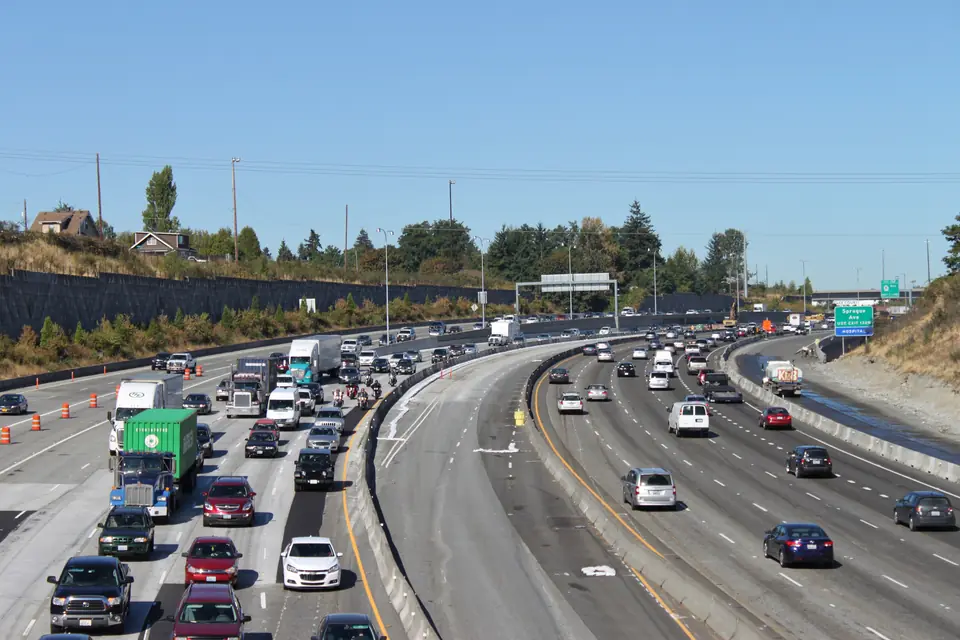
I-5 through Tacoma carries heavy traffic close to the shoulder, and rain cuts how far drivers can see. A tire change on the left side of a car on the right shoulder puts someone a few feet from moving lanes. That's why the person who comes may ask you to roll a little further, to an exit ramp's end or a wider spot.
Driving on a flat for a short, slow distance to reach a safer place can ruin the tire and sometimes the rim. A tire is cheaper than a person, so getting somewhere safe comes first.
If you're on SR 16 or on the Narrows Bridge, the same rule applies with more force: get off the span before stopping if the car still rolls.
What is the difference between a mobile tire change and a tire plug?
A mobile tire change swaps the flat for your spare so you can drive to a shop. A plug seals a small hole in the tread so the same tire can hold air again. A plug only works for a clean puncture in the tread, never in the sidewall.
Many shops treat a roadside plug as a way to get you moving, then patch the tire properly from the inside later. Ask about that on the call, so you know if the plug is meant to last or just to get you home.
If your car has no spare, only an inflator kit, say so. Plenty of newer cars ship that way. It changes the job from a swap to a plug, an inflate or a tow.
How far can I drive on a temporary spare?
A compact spare is built for short distances at reduced speed. The speed limit is printed on its sidewall, and it is often 50 mph. Use it to reach a tire shop, not for the week. Full-size spares carry no such limit if they are the matching size.
Check the spare's pressure. Many temporary spares need far more air than the regular tires, and a spare that sat in the trunk for years is often low. A flat spare is a common reason a simple change turns into a tow.
A spare on the front of a front-wheel-drive car can make the car pull and brake unevenly. Drive gently until the full tire is back on.
What tire details should I give when I call?
Give the tire size printed on the sidewall, such as 225/65R17, which wheel is flat, and whether you have a spare and the jack. If the wheels have locking lug nuts, find the key, usually in the glove box or with the spare.
Without the wheel lock key the wheel may not come off at the roadside, and the job becomes a tow. It is worth checking where that key lives before you need it.
A dashboard tire light only means low pressure somewhere. Look at all four tires. Sometimes the problem is a slow leak that only needs air and a plug, not a change at all.
Is mobile tire service available for trucks and SUVs in Tacoma?
Yes for most pickups, vans and SUVs. Say the vehicle type and whether it is lifted, towing a trailer or loaded, because heavier vehicles need a jack and tools rated for the weight. Dually rear wheels and commercial trucks need a heavier service.
Pickups often carry the spare under the bed on a cable. If that cable has rusted or seized, which happens in a damp climate, the spare may not come down. Mention it if you tried and it wouldn't move.
If the trailer has the flat and not the truck, say that first. Trailer tires use different sizes and the trailer may need to be unhitched or moved.
For anything that won't come off at the roadside, the next step is towing to a tire shop.
What should I do while I wait for a tire change?
Stay in the car with your seat belt on if you're on a freeway or busy road. Keep the hazards on. If you must get out, leave on the side away from traffic and stand well back behind a barrier or up the bank, never between the car and the lanes.
Washington's move-over law makes drivers slow down or change lanes for tow trucks and vehicles showing 360-degree warning lights. A stopped car with only its hazards on isn't named in it, so traffic may not give you room. That is the reason to stay put.
Read more about stopping safely on freeways and the Narrows Bridge, or go back to Tacoma roadside assistance for the other services.
Why do tires go flat more often on wet Tacoma roads?
Rain washes nails, screws and glass into the gutters and lane edges, right where tires roll when you pull over or turn. Water also hides debris and potholes. A slow leak from a small puncture often shows up the morning after a wet drive.
Potholes open up after long wet spells, and a hard hit can crack a rim or cut the sidewall. That kind of damage won't take a plug, so mention a pothole hit if you remember one.
Tread depth matters in rain. Worn tires lose grip on standing water long before they look bald, which is worth fixing once the flat is sorted.